
Every Sunday Night, the Same Battle Starts Again: Understanding School Refusal in Kids
Updated: Sep 1

Your child's stomach hurts. The tears come. By Monday morning, you are standing at the door watching your kid fall apart, and you already know the school parking lot is going to be worse.
You've been told it is anxiety. You've been told it is a phase. You've been told to "just be firm" and push them through it. But deep down, you know something bigger is happening.
What most parents are describing here is school refusal in kids, and it rarely looks like a kid not wanting to go. It looks like real, physical panic.
This is not your child being difficult. This can be a nervous system in crisis.
If this sounds like your family, this is for you. Not for the parent of a strong-willed kid who would rather sleep in. This is for the parent whose child genuinely cannot walk into that classroom. The parent who is tired of being told their child is manipulative. The parent who knows, in their gut, that something deeper is driving the meltdowns, the stomach aches, and the panic.
Here is what may be going on, and what you can do about it.
Quick answer: For many kids, school refusal is not defiance. It is a nervous system stuck in survival mode, reading an ordinary classroom as a real threat. That is why "just push through it" often backfires: you cannot reason a body out of a stress response. At The Well Healing Center in Lafayette, CO, we use INSiGHT scans to measure where a child's nervous system is stuck, then use gentle, specific adjustments to support its ability to calm and regulate, working alongside the rest of your child's care team, not in place of it.
Why School Refusal in Kids Looks Like Defiance (But Isn't)
School refusal and truancy can look identical from the outside, but they are not the same thing.
Truancy is a choice. School refusal is what happens when a child's survival brain takes over and the thinking, reasoning part of the brain goes offline. They are not choosing this. They can no more think their way out of it than you could think your way out of a full panic attack.
This is exactly why punishment tends to backfire. It does not change what is happening in their nervous system. It just adds more stress to a system that is already overloaded. "Just push through it" sounds like tough love, but for these kids it often makes things worse.
Your child is not being defiant. Their body is trying to protect them.
Their Gas Pedal Is Stuck
In many kids with school refusal, the nervous system is stuck in a stress state and cannot downshift into calm.
Picture the autonomic nervous system (the automatic, behind-the-scenes system) as a car with two pedals. The sympathetic system is the gas: fight, flight, protection. The parasympathetic system is the brake: calm, rest, regulation, recovery.
In these kids, the gas pedal has been pressed down for a long time. The system is stuck in what we call sympathetic dominance, and it is reading a normal classroom as a genuine threat.
It is not a mindset problem. It is a wiring problem.
The Vagus Nerve: The Missing Piece
The vagus nerve is one of the biggest reasons a stressed nervous system struggles to feel safe.
It is the longest of the cranial nerves, and it runs through the parasympathetic system, the "brake" side of things. It helps control digestion, heart rate, emotional regulation, and the ability to feel connected to other people. When it is working well, kids can read facial expressions, handle everyday stress, and feel safe around others.
When it is not working well, the nervous system loses some of its ability to tell the difference between safe and dangerous. Those morning stomach aches you keep seeing? They may not be random. The gut and the brain are in constant conversation through this nerve, so a dysregulated system can show up as a hurting belly.
The body is not making it up. It is sending a signal.
Here is something most parents have never been told. This pattern usually started building long before the first day of kindergarten.
Prenatal stress may shape how a developing baby's nervous system learns to respond to stress. Birth can add strain too: forceps, vacuum extraction, C-section, or a long labor can put pressure on the upper neck and brainstem. Then early childhood often layers on more: ear infections, rounds of antibiotics, sleep struggles, sensory overload.
By the time your child reached school age, this was not a behavior problem waiting to happen. It may have been a nervous system that never got the chance to build resilience in the first place.
This is not about blame. It is about finally seeing the whole story.
So What Can Actually Help?
This is where neurologically-focused chiropractic care can play a role, as one part of your child's support.

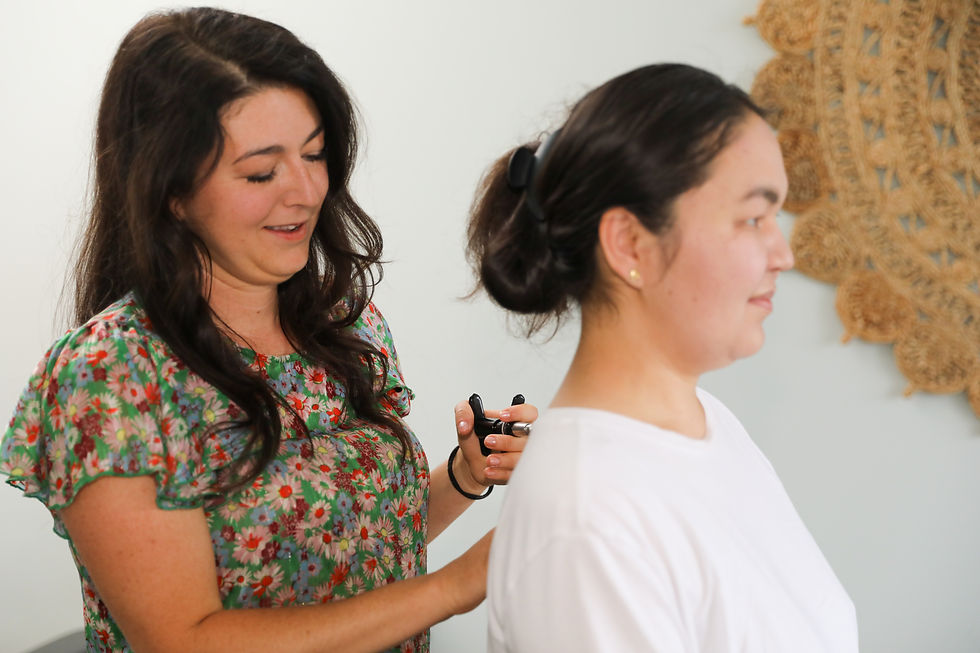
We use INSiGHT scans to objectively measure how your child's nervous system is functioning. HRV (heart rate variability) shows the balance between that gas pedal and brake pedal. sEMG (surface EMG) measures muscle tension along the spine, where stress often gets physically stored. Thermal scans reveal areas of nervous system stress and dysautonomia (an out-of-balance autopilot system).
From there, gentle, specific adjustments help release stored tension and support healthy vagus nerve function.
I want to be honest with you about two things. First, chiropractic care does not treat or cure anxiety or any diagnosed condition. What we can do is support how the nervous system functions and adapts. Second, this works best alongside the rest of your child's care team. If your child is truly struggling, please keep your pediatrician and any mental health providers in the loop. School refusal can involve real anxiety, and your child deserves the full team.
Supporting the foundation does not replace that team. It strengthens the ground they are all standing on.
Your Child Isn't Broken. And This Isn't Your Fault.
If your child has been struggling with school refusal, please hear this. They are not broken. Not bad. Not manipulative. And you have not failed them.
They are stuck in stress mode, and the nervous system can change. But first, someone has to actually look at it, measure it, and help address what is driving the response at the root.
You have not been failing. You have been missing one specific piece.
Ready to Map a Path Forward? Start Here in Lafayette CO
If you are ready to stop pushing and start understanding what is really going on, we would love to help. We would sit down with your family, run a full neurological evaluation, and help map out a path forward together, in coordination with your child's other providers. We see families from Lafayette, Erie, Louisville, Boulder, and all over Boulder County.
Your child deserves more than another label. They deserve answers.
Frequently Asked Questions
What's the difference between school refusal and truancy?
They can look identical from the outside, but they are not the same. Truancy is a choice. School refusal is what happens when a child's survival brain takes over and the thinking part of the brain goes offline. The child is not choosing it, and they cannot simply think their way out of it, any more than you could think your way out of a panic attack.
Why doesn't "just push through it" work for school refusal?
Because you cannot reason a body out of a stress response. When a nervous system is stuck in survival mode, punishment and pressure just add more stress to a system that is already overloaded. It often makes things worse, not better. The goal is to help the nervous system feel safe first.
Why does my child get stomach aches before school?
The gut and the brain are in constant two-way conversation, largely through the vagus nerve. When the nervous system is dysregulated, that stress can show up physically as a hurting belly. The stomach aches are not your child making it up. They can be real signals from an overloaded system.
Can chiropractic care help with school refusal?
Chiropractic care does not treat or cure anxiety or any diagnosed condition. What gentle, neurologically-focused adjustments can do is support how the nervous system functions and adapts, ideally alongside your pediatrician and any mental health providers. Supporting the nervous system foundation is meant to complement that care, not replace it.
We provide gentle pediatric chiropractic care in Lafayette, CO for children of every age.


Comments