
Why Transitions Feel Like a Battle: Understanding Transition Meltdowns in Kids
Updated: Sep 1

If getting your child out the door feels like negotiating a hostage release every single morning, you are not imagining it.
The screen-off-for-dinner battle. The meltdown in the grocery store parking lot. The Sunday-night dread before the week has even started. The 45-minute standoff over one pair of socks.
For most families, this is what transition meltdowns in kids look like up close, not one big blowup, but a string of small daily battles that never seem to ease up.
If any of that sounds like your house, take a breath. You are not failing. And you are not alone.
We hear it constantly. "I've tried every reward chart, every visual timer, every deep breath, and nothing sticks."
Here is what I want every parent to hear. Smoother transitions are not really a behavior problem. They are a nervous system issue. Once you understand what is actually happening in your child's brain and body during a change, everything shifts, including what kind of help actually moves the needle.
Quick answer: For many kids, transitions feel like a battle because their nervous system is stuck in a stress state and cannot downshift on command. Changing activities asks the brain to stop one thing, hold the next thing in mind, and switch gears fast, and a nervous system already running hot reads that as a threat. That is why reward charts and timers so often fall flat. At The Well Healing Center in Lafayette, CO, we use nervous system scans to see where a child is stuck, then support the body's ability to calm and adapt, so daily transitions get easier from the root.
You Are Not Failing, and Here Is What We See Every Week

You are not failing, and no amount of "better parenting" can force a stuck nervous system to settle on its own.
We see this every single week. A parent walks in exhausted, describing the same scene on repeat. Mornings end in tears. Transitions at school need a teacher to step in. Pickup is chaos. Bedtime is a two-hour standoff. The child has often already been labeled, sometimes with ADHD, sometimes anxiety, sometimes Sensory Processing Disorder (a difficulty processing everyday sights, sounds, and touch, often shortened to SPD).
This family has tried therapies, parenting books, school accommodations, and every transition tool the internet recommends. Some help a little. None really reaches the root.
And then the parent says some version of: "I feel like I'm failing."
You are not. You are caring for a child whose nervous system cannot downshift, and that is not a character flaw or a parenting problem.
Research even suggests anxiety is one of the most common conditions to show up right alongside ADHD in kids. That overlap is not a coincidence. These challenges often share a common neurological root. Until that root gets attention, families end up chasing symptoms in a system that simply does not have the capacity to settle.
Why Transition Meltdowns in Kids Are So Hard on Developing Brains
Every transition asks your child's brain to do three hard things at once: let go of what it is doing, hold the next step in mind, and shift gears, all in a few seconds.
Researchers call this "set shifting," the skill of moving attention from one task to the next. It runs on executive function in the prefrontal cortex, a part of the brain that keeps developing well into early adulthood.
For kids with ADHD, anxiety, or sensory challenges, these circuits develop differently. The harder the brain is already working just to keep up, the more taxing every single switch becomes. That is why a small request like "put your shoes on" can land like a much bigger one for your child, even when it does not look that way to you.
Your child is not being difficult on purpose. Their brain is doing something genuinely hard.
A Stressed Nervous System Can't Just "Calm Down"
A stressed nervous system cannot calm down on command, no matter how nicely you ask.
Think of the autonomic nervous system (the automatic, behind-the-scenes system) like a car with a gas pedal and a brake pedal. The sympathetic branch is the gas pedal: activation, alertness, go, go, go. The parasympathetic branch is the brake: calm, regulation, the ability to adapt.
Many kids today are living with a stuck gas pedal and a weak brake, often linked to an underactive vagus nerve (the main nerve that helps the body downshift into calm). This imbalance is called dysautonomia, and it keeps the body in a low-grade state of alarm.
When a nervous system is already running hot, ordinary change registers as a threat, and a meltdown follows. Not because your child is being difficult. Because their body is doing exactly what a dysregulated nervous system does.
You cannot reason a body out of alarm. You have to help it feel safe first.
ADHD, Anxiety, and SPD: More Alike Than You'd Think
The label on the chart may look different from child to child, but the underlying nervous system pattern is often strikingly similar.
All three tend to involve sympathetic dominance (that gas pedal stuck down) and a reduced ability to shift into calm, flexible states. It just shows up in different ways.
A child with ADHD can find it almost physically painful to break away from a favorite activity. A child with anxiety is often flooded with worry before the change even arrives. A child with SPD may already be maxed out just processing sound, light, and touch.
This is exactly why behavior charts so often fall flat. You cannot discipline a nervous system into regulating.
The "Perfect Storm" Behind Nervous System Dysregulation
A nervous system rarely gets stuck from one big event. Usually it is a stack of smaller stressors that build up over time, something we call the "Perfect Storm."
It can start as early as pregnancy, when prenatal stress may prime a baby's system to be more sensitive. Then birth itself can add strain. C-sections, forceps, vacuum delivery, induction, or a long stalled labor can put pressure on the upper neck.
From there, the early years pile on: antibiotics, ear infections, falls, screen time, and a world that never stops buzzing.
Each stressor on its own might seem like no big deal. But stacked together, they can leave a nervous system stuck on the gas. The result is often subluxation (tension and interference that keep the stress response locked "on") long after the original stressors have passed.
This is not about blame. It is about understanding the load your child has been carrying.
What Actually Helps, Starting at Home
There is a lot you can do to support your child's nervous system starting today.
Give previews and countdowns
A little warning gives the brain time to prepare instead of getting blindsided.
Build predictable routines
The same sequence every morning turns transitions into habits instead of battles.
Add movement
A quick stretch or a few jumping jacks can help burn off built-up stress energy.
Protect sleep
Sleep is when the brain recharges its capacity to regulate.
Kids co-regulate with the adults around them. Your calm is contagious, in the best way. Your regulation is their roadmap home.
These strategies genuinely help. But if you have tried them consistently and you are still white-knuckling through every transition, that is not a sign you are doing it wrong. It is a sign your child's nervous system may need deeper support than home strategies alone can give.
You Don't Need More Labels. You Need Answers.
If your child keeps melting down through every transition no matter what you try, please hear this. It is not a parenting failure. It is not a discipline problem. And it is not something they will simply grow out of on their own.
Your child is not broken. Not bad. Not defiant. They are overwhelmed.
You have not been failing. You have been missing one specific piece.
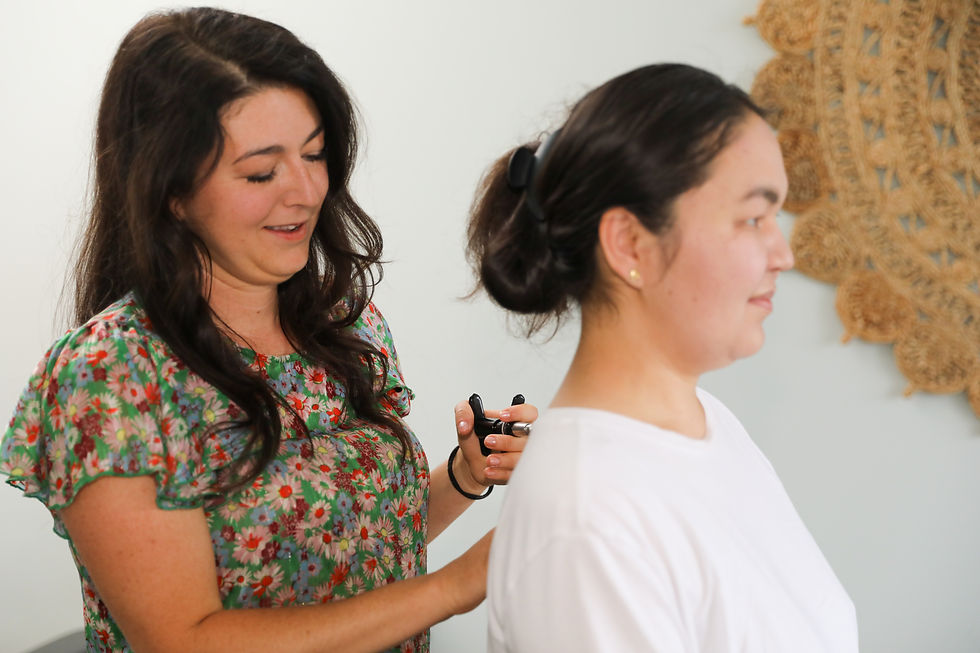
At The Well Healing Center, we use INSiGHT scans (heart rate variability, surface EMG, and thermal scanning) to see where your child's nervous system is stuck and what is feeding the dysregulation. From there, gentle, specific adjustments help restore balance: easing the gas pedal and bringing the brake pedal back online.
I want to be honest about what this is. Chiropractic care does not treat or cure ADHD, anxiety, or SPD. What we can do is support how your child's nervous system functions and adapts. As that balance improves, some parents tell us the daily flashpoints start to soften: easier mornings, fewer meltdowns at pickup, smoother bedtimes, more flexibility when plans change.
Managing the behavior is not the same as fixing the foundation.
Ready for Easier Transitions? Start Here in Lafayette CO
If you are ready to stop chasing symptoms and start looking at the root, we would love to help. We see families from Lafayette, Erie, Louisville, Boulder, and all over Boulder County.
Your child does not need more labels. They need answers.
Frequently Asked Question
Why does my child melt down during every transition?
For many kids, transitions are hard because their nervous system is stuck in a stress state and cannot shift into calm quickly. Changing activities asks the brain to stop, hold the next step in mind, and switch gears fast. When the system is already running hot, that ordinary change registers as a threat, and a meltdown follows. It is not defiance.
Are reward charts and timers supposed to fix transition meltdowns?
They can help a little, but they often fall flat because you cannot discipline a nervous system into regulating. Charts and timers target behavior. If the real issue is a dysregulated nervous system, the tools are aimed one layer above the actual problem.
How do I know if it's behavior or my child's nervous system?
A good clue is when you have tried the strategies consistently, with love and patience, and your child is still falling apart at every change. That usually points to a nervous system that needs deeper support, not a parenting gap. A nervous system scan can show whether your child is stuck in a stress pattern.
Can chiropractic care help with meltdowns and transitions?
Chiropractic care does not treat or cure ADHD, anxiety, or SPD. What gentle, specific adjustments can do is support how the nervous system functions and adapts. As balance improves, some parents notice easier mornings, fewer meltdowns, and more flexibility when plans change.
We provide gentle pediatric chiropractic care in Lafayette, CO for children of every age.


Comments