
When Strep Changes Everything: Understanding PANS and PANDAS
Updated: Sep 7
One day, your child is just themselves.

The next, they are not.
Tics appear out of nowhere. OCD behaviors start taking over their day. Rage, anxiety, and separation issues show up almost overnight.
You have been to the pediatrician. Maybe the neurologist. Maybe even a psychiatrist. You have been told it is Tourette's, or ADHD, or "just anxiety."
But deep down, you know something bigger is happening underneath.
That gut feeling is real.
And if you are reading this because your child changed seemingly overnight after an illness, you are not imagining it. You may be describing PANS or PANDAS.
Quick answer: PANDAS stands for Pediatric Autoimmune Neuropsychiatric Disorders Associated with Streptococcal Infections. PANS is the broader umbrella for the same sudden-onset pattern triggered by other infections, not just strep. In both, the immune system responds to an infection and, in some kids, appears to affect the brain, leading to a rapid cluster of symptoms like tics, sudden OCD, and big mood changes. It is a medical condition that belongs with your child's doctors. At The Well Healing Center in Lafayette, CO, we work alongside that medical team, focusing on the nervous system layer that often gets missed.

What PANS and PANDAS Actually Are
PANS and PANDAS describe a sudden, dramatic onset of neuropsychiatric symptoms that tend to follow an infection.
PANDAS is specifically tied to strep. PANS is the wider umbrella that covers the same abrupt pattern triggered by other infections too.
The current understanding is that the immune system, while responding to the infection, may mistakenly affect healthy brain tissue. The result can be a cluster of symptoms that feels like your child changed personalities overnight:
Sudden OCD behaviors, like checking, counting, extreme handwashing, or fear of germs
Motor tics (eye blinking, facial grimacing, head jerking) and vocal tics (throat clearing, grunting, word repetition)
Big emotional swings, rage, and separation anxiety
Sensory sensitivities and developmental regression
Changes in handwriting and a sudden drop in school performance
Most cases tend to show up in early childhood, and most families describe the same thing: it happened almost overnight, within days of an illness.
If that is your story, you are not alone, and you are not imagining the timing.
Why This Isn't "Just" a Strep Infection
If PANDAS were purely about bacteria, every child with strep would develop it. They do not. So why do some kids spiral and others do not? This is what we call the child's own "Perfect Storm," a layered set of vulnerabilities that were often building long before the strep infection ever showed up:
Genetic vulnerability. Some children may simply be more susceptible to this immune response than others.
Environmental stressors. Things like toxin exposure, heavy antibiotic use, and birth strain can stack the deck.
Timing and frequency. How often and when a child gets sick may matter as much as the infection itself.
A nervous system that was already dysregulated. Many of these children show signs of nervous system dysregulation and dysautonomia (an out-of-balance autopilot system) before the strep ever hits.
In other words, the infection may be the spark. But for many kids, the neurological foundation was already unstable, which may be part of why the reaction is so severe, and why it can feel like a rollercoaster that never quite stops.
This is not about blame. It is about seeing the whole picture.
Why So Many Families Feel Stuck
If you have done "all the things" and still feel like you are circling, you are not failing your child.
You are running into the limits of addressing the signs without addressing what is underneath them.
Antibiotics target bacteria, but they do not address the underlying neurological picture. CBT and behavioral therapy can help a child cope with symptoms, but they are not designed to reach the nervous system itself. Anti-inflammatory diets, detox protocols, and supplements can be genuinely helpful pieces of the puzzle, but on their own they are incomplete. IVIG and plasmapheresis are typically reserved for severe cases and carry real trade-offs that families weigh carefully with their doctors.
Every one of these has value. But without also looking at the subluxation and dysautonomia underneath, many families find themselves back on the same rollercoaster: new label, new medication, same underlying pattern.
A Different Starting Point: The Nervous System
Neurologically-focused chiropractic care starts from a different question: not "how do we suppress this symptom?" but "what is the nervous system's capacity to regulate and adapt?" It is not a replacement for your child's medical team. It is a layer that often gets missed entirely.
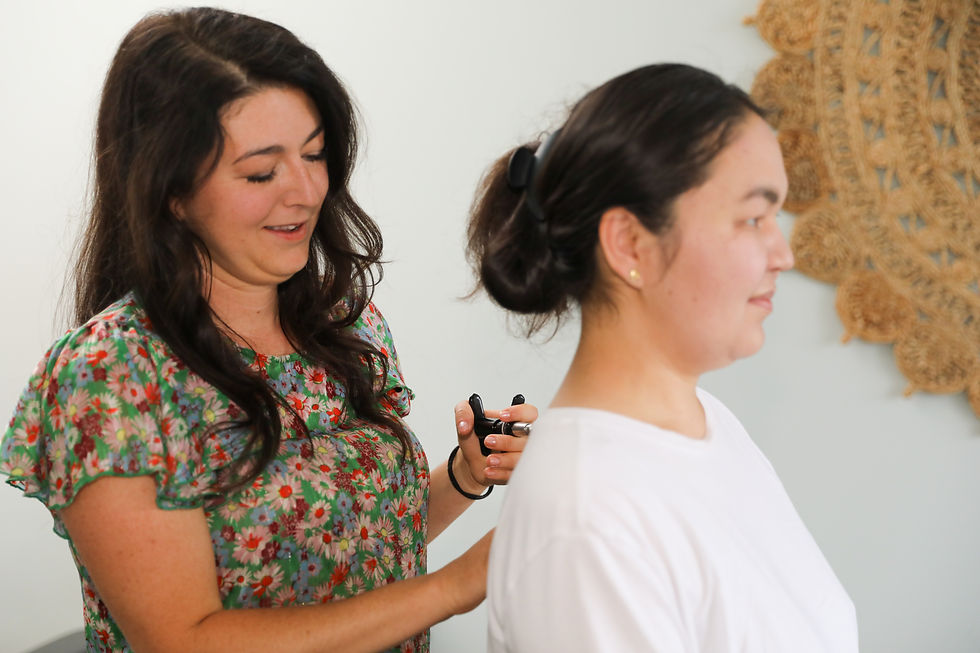
A few things worth understanding. Subluxation is neurological interference, not just a misaligned bone. It affects how the nervous system communicates with the rest of the body. And we do not guess, we test: INSiGHT scans measure autonomic function, muscle tension, and vagal tone, giving a real, objective picture of what your child's nervous system is doing rather than relying on guesswork. From there, gentle, specific adjustments help support the nervous system's own ability to regulate and adapt.
I want to be very clear about this. Neurologically-focused chiropractic care does not treat or cure PANDAS or PANS. It works alongside your child's medical, integrative, and therapy team, not against it.
It is a foundational layer that may support your child's own capacity to regulate, adapt, and heal. Supporting the foundation does not replace the team. It gives the whole team stronger ground to build on.
Caleb's Story
Every family's path looks different, and results vary from child to child. Here is one family's experience.
In the middle of 4th grade, Caleb's family watched their once-lively boy get pulled under by motor tics, mood swings, and trouble focusing. Part of the picture was a PANDAS diagnosis.
Neurologists added a Tourette's label. Psychiatry cycled him through medication for anxiety and ADHD, with little to show for it. His grades dropped. He felt like an outcast at school.
On a friend's recommendation, his family added neurologically-focused chiropractic care alongside his medical care. With a customized care plan built around his nervous system, his family began to see his tics ease, his grades start climbing, and his mood settle. His mom says he is easier to redirect now, and more connected with his peers.
This is Caleb's story. Every child's nervous system and situation is different, and results vary. But his family's experience is a picture of what can be possible when the nervous system finally has a stable foundation to work from.
Your Child Doesn't Need Another Label. They Need Answers.
If your child is caught on the PANDAS rollercoaster, one flare after another, one label after another, one medication after another, there is a layer worth exploring that most families never hear about.
Your child is not broken. Not bad. Not defiant. They are a child whose nervous system is overwhelmed and looking for stable ground.
You have not been failing. You have been missing one specific piece.
You do not have to choose between your child's medical care and looking deeper. You can do both.
Ready for a Nervous System Assessment? Start Here in Lafayette CO
If you are ready to explore that missing layer alongside your child's medical team, we would love to help. We see families from Lafayette, Erie, Louisville, Boulder, and all over Boulder County.
Your child does not need more labels. They need answers, and you are already asking the right questions by reading this far.
Frequently Asked Questions (FAQ)
What is the difference between PANS and PANDAS?
PANDAS is specifically tied to strep infections (the D stands for "associated with streptococcal infections"). PANS is the broader umbrella. It covers the same sudden-onset pattern of symptoms when it is triggered by other infections, not just strep. Both describe an abrupt change in a child, often within days of an illness.
What are the signs of PANDAS in kids?
Families often describe a dramatic, almost overnight change: sudden OCD behaviors, motor or vocal tics, big mood swings, rage, separation anxiety, sensory sensitivities, changes in handwriting, and a sudden drop in school performance. The hallmark is how fast it comes on, usually after an infection.
If my child gets strep, will they get PANDAS?
No. If it were purely about the bacteria, every child with strep would develop it, and they do not. It appears to depend on a stack of other factors, like individual susceptibility, environmental stressors, and whether the nervous system was already dysregulated before the infection. Strep may be the spark, not the whole story.
Can chiropractic care help a child with PANS or PANDAS?
Chiropractic care does not treat or cure PANS or PANDAS, and it is not a replacement for your child's medical team. What gentle, neurologically-focused care can do is support how the nervous system functions and adapts, ideally working alongside your child's doctors and therapists as one layer of the bigger picture.


Comments