
The Birth Trauma Behind Your Child's Symptoms

Birth trauma does not have to look like 40 hours of labor or six weeks in the NICU.
Sometimes it looks like a cord wrapped a little too tightly. A vacuum used for thirty seconds. A C-section everyone called routine. A labor so fast the nurses barely made it into the room. A provider pushing against your wishes and leaving you feeling unheard.
If you are reading this, there is a good chance you already know that feeling. The one where you walked out of the delivery room with a healthy baby, and yet some quiet part of you has never fully let go of what happened in there.
We see this pattern every single week. A parent brings in a four-month-old who arches and cries through every feeding. Or a four-year-old who still cannot sit still, still cannot settle at bedtime, still is not hitting the milestones the pediatrician keeps circling. And somewhere in the intake paperwork is a birth story that nobody ever thought to connect to what is happening right now.
Here is what most families are never told. The most lasting effects of a hard birth usually are not the bruises or swelling that show up on day one. They are the changes to how your baby's nervous system communicates with the rest of the body. And those changes can stay quiet for weeks, months, or even years before they surface as colic, reflux, delayed milestones, or a child who simply cannot calm down.
Quick answer: Birth trauma does not have to be dramatic to matter. Even a "routine" intervention like a quick vacuum, a C-section, or a very fast labor can put stress on a newborn's delicate upper neck and brainstem, where the nervous system is dense and still developing. The lasting effect is often not a visible injury, but a change in how the nervous system communicates, which can show up later as colic, reflux, delayed milestones, or a baby who cannot settle. At The Well Healing Center in Lafayette, CO, we gently measure the nervous system and support its ability to regulate, working alongside your pediatrician.
The Numbers Behind Birth Trauma
Birth trauma is far more common than most parents realize, and much of it is never measured.
The severe, visible birth injuries (nerve damage, spinal cord injury) are relatively rare and get tracked and reported. What gets far less attention is how many mothers describe their own birth as traumatic in some way. Research suggests a large share of moms report experiencing some form of birth trauma, and a smaller portion go on to develop postnatal PTSD, which is a real and treatable mental health condition worth taking seriously.
And none of those figures account for what we are really talking about here: the nervous system dysregulation, the vagus nerve dysfunction, and the subluxation that no standard newborn exam is looking for. The true reach of birth trauma is likely wider than the injury statistics suggest.
Birth Trauma Is Bigger Than the Birth Injury List
When most people hear "birth trauma," they picture the things documented in the delivery room: bruising, fractures, nerve damage. That is real, but it is only the first layer.
There is an emotional and psychological layer too, one that affects mom just as much as baby. It can range from a genuine medical emergency to simply feeling unheard by the care team.
But the most overlooked layer is neurological: how the birth process changed the way your baby's brain and body communicate. A few signs show up in the first hours. Many stay quiet for weeks, months, or years before anyone notices. A birth can be charted as completely uncomplicated on paper and still leave a real neurological mark. Even rough manual assistance, like twisting or pulling on a baby's head, can matter to a developing nervous system.
The Perfect Storm Starts Before Labor Does
Birth trauma is rarely caused by one single thing. It is usually the convergence of several, what we call the "Perfect Storm."
Fertility challenges and high-risk pregnancies can start stacking the deck long before the delivery room.
Maternal stress and anxiety during pregnancy shape the environment your baby's nervous system develops inside of.
Complications during labor and delivery, like prolonged labor or fetal distress, layer more stress onto that foundation.
Medical interventions, like forceps, vacuum extraction, or emergency cesarean, add another layer on top.
A lack of support or clear communication from providers can compound the strain on both mom and baby.
No single factor causes birth trauma. It is the combination that creates the Perfect Storm. And if any of this sounds like your story, please hear this: it was not your fault.
Four Common Interventions, Four Neurological Ripples
Four of the most common birth interventions each leave their own kind of ripple.
Cord wrapping, when a cord is wrapped tightly, can compress the upper cervical spine and brainstem, which is dense neurological territory. Induction can create stronger, more forceful contractions that push a baby into harder positions and strain the neck. Cesarean, now about 1 in 3 US births, means a baby misses the gradual molding of the birth canal that helps prime the nervous system. Forceps and vacuum apply twisting and pulling forces directly to the most vulnerable region of a newborn's body.
Risk can also climb with labor beyond 18 hours, a very fast labor under 3 hours, breech positioning, or a higher birth weight. Any of these may create subluxation, which is neurological interference in how the brain and body communicate.
This is not about blame. It is about understanding what your baby's body may have been through.
Subluxation, Dysautonomia, and the Vagus Nerve
Subluxation is not simply "a bone out of place." It interferes with how the neurospinal system sends and receives signals.
That interference can set off a cascade: nervous system dysfunction first, then dysregulation, then imbalance in the autonomic nervous system. That imbalance is called dysautonomia, and no conventional medical test is routinely looking for it in children.
The vagus nerve runs right through the brainstem and upper neck, exactly where the forces of a difficult birth concentrate. When it is affected, you may see reflux, constipation, heightened sensory sensitivity, and real difficulty self-soothing.
Think of it like this. The whole system can stay stuck in sympathetic dominance: gas pedal pressed down, brake pedal out of reach. Your baby is not giving you a hard time. Your baby is having a hard time.
The Neurological Path Forward

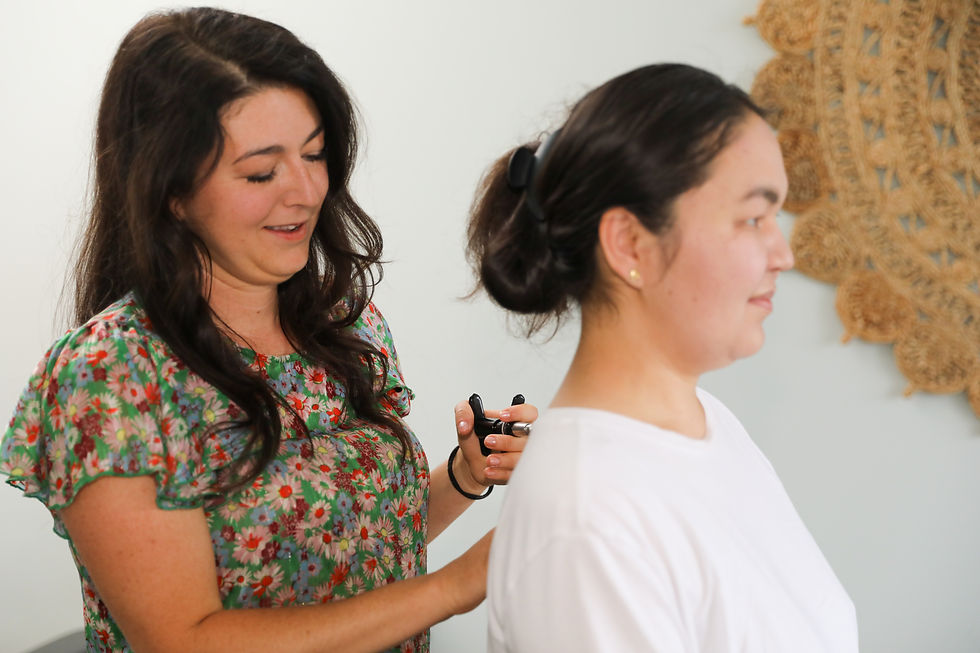
The good news is that this is not the end of the story. It is the beginning of a different one. Neurologically-focused chiropractic care is gentle, drug-free, and specific enough to be appropriate for a newborn. Instead of guessing, we use INSiGHT scans to measure nervous system function directly, showing us where the neurospinal system is stuck in stress mode and how much adaptive reserve your child has.
The adjustments are light and precise. For an infant there is no twisting, no cracking, and no force. The pressure is about what you would use to check whether an avocado is ripe. As regulation improves, families commonly notice changes in sleep, digestion, feeding, and overall calm.
I want to be honest about what this is. Chiropractic care does not treat or cure any condition. It is not a replacement for your pediatrician, and it works alongside your medical team. This is not about chasing a diagnosis. It is about supporting your baby's own ability to regulate and adapt.
You Don't Have to Carry This Alone
Your child's birth story is not something to carry guilt about.
You made the decisions you had to make with the information you had, and you made them while doing one of the hardest things a human body can do.
Your baby is not broken. They may just be stuck in stress mode. And when we ease that nervous system tension, a lot can change.
You have not been failing. You have been missing one specific piece.
Ready to Understand the Birth Story? Start Here in Lafayette CO
If any of this sounds like your family, we would love to sit down with you and look at what is actually happening, alongside your pediatrician. We see families from Lafayette, Erie, Louisville, Boulder, and all over Boulder County.
Your child does not need more labels. They need answers.
Frequently Asked Questions
Can a "routine" birth still cause birth trauma?
Yes. Birth trauma does not have to be dramatic. Even a quick vacuum, a C-section everyone called routine, or a very fast labor can put stress on a newborn's delicate upper neck and brainstem. A birth can be charted as completely uncomplicated and still leave a neurological mark that shows up later.
How can birth trauma affect my baby's nervous system?
The most lasting effects of a hard birth are often not the visible bruises, but changes in how the nervous system communicates with the body. Stress on the upper neck and brainstem, where the vagus nerve runs, can leave the system stuck in a stress state. That can show up as reflux, constipation, sensory sensitivity, and trouble self-soothing.
What are signs of birth trauma in a baby?
Common signs families describe include arching and crying through feedings, reflux or constipation, trouble settling or sleeping, a strong preference for turning the head one way, and later, delayed milestones or a child who cannot calm down. These can stay quiet for weeks or months before anyone connects them to the birth.
Can chiropractic care help with birth trauma?
Chiropractic care does not treat or cure any condition, and it is not a replacement for your pediatrician. What gentle, neurologically-focused care can do is measure and support how a baby's nervous system regulates and adapts. Infant care is a light fingertip contact with no twisting, cracking, or force, and it works alongside your medical team.


Comments