
Why Missed Baby Milestones Are Nervous System Red Flags

Updated: Sep 1

In your baby's first year, their brain will double in size and form more than a million new neural connections every single second. That makes this the most critical window for neurological development your child will ever have.
And yet most parents are simply told to track milestones, the first smile, the first roll, the first steps, and if something feels off, the answer is almost always the same. "Wait and see." Or, "they'll grow out of it."
But what if your baby is technically hitting milestones while their nervous system is struggling underneath? What if the foundation has a crack in it, and nobody is checking?
Here is what we want every parent to understand. Your baby's first year is about so much more than a checklist, and you deserve to know the full picture.
A Baby Can "Pass" Every Screening and Still Struggle
This is something most parents never hear. A baby can technically pass every developmental screening while still carrying underlying neurological dysfunction that will affect their health, learning, and behavior for years.
The conventional model checks whether your baby can roll at six months. It does not check how they roll. Is it symmetrical? Is it coordinated? Is it built on a solid neurological foundation?
We hear the same story from families every week: "I knew something was off, but everyone told me not to worry."
If that resonates, keep reading, because your instincts may be picking up on something very real.
Your Baby's Nervous System Is the Air Traffic Controller
Everything your baby does, feeding, sleeping, moving, managing emotions, is run by their nervous system. In the first year, their brain has an extraordinary ability to adapt and form new pathways. This is called neuroplasticity, and it is a remarkable gift.
But that same neuroplasticity that makes rapid development possible also makes the nervous system uniquely vulnerable to stress.
Two concepts every parent should know:
Subluxation is neurological interference that can develop from prenatal stress or birth trauma. It can create lasting patterns of dysfunction in how your baby's body works, even if they look completely fine on the outside.
Dysautonomia is an imbalance between the body's gas pedal (the sympathetic, fight-or-flight side) and its brake pedal (the parasympathetic, rest-and-digest side). When those two are out of balance, everything gets thrown off: sleep, digestion, mood, development.
When the foundation of the nervous system is stressed, every milestone that follows is built on shaky ground.
Every Milestone Is Actually a Neurological Test
Think of your baby's milestones not just as adorable moments for the camera, but as windows into how their nervous system is developing.
Feeding is your baby's first major neurological assessment. Latching and suckling require multiple cranial nerves and precise coordination between the nervous system and the muscles. Difficulty feeding is often one of the earliest signs that something needs support.
Head control at 8 to 12 weeks tells us how the cervical spine and deep neck muscles are developing, and how well the brain is communicating with the body.
The "4-month sleep regression" is not actually a regression. It is evidence of major neurological reorganization happening in your baby's brain. Understanding that changes how you support them through it.
Crawling is one of the most neurologically significant milestones of the entire first year. It stimulates balanced development of both brain hemispheres and builds a critical foundation for walking and reading. Babies who skip crawling or crawl asymmetrically often struggle later with learning, coordination, and regulation.
Here is the key takeaway: the sequence of development matters far more than the speed. It is not just about when your baby hits a milestone. It is about how they get there.
The Perfect Storm That Disrupts Development
Some babies seem to struggle more than others, and there is a reason. We call it the Perfect Storm, a layering of stressors that overwhelms a developing nervous system before a baby even has a chance to begin.
It can start before birth. Prenatal stress and chronic anxiety during pregnancy directly affect fetal brain development. It can start before birth. Prenatal stress and chronic anxiety during pregnancy directly affect fetal brain development — which is why pregnancy chiropractic care during that window matters too. Then comes birth itself, where interventions like Pitocin, forceps, vacuum, and c-section can place significant pressure on your baby's head, neck, and nervous system.
After birth, the stressors can keep piling on: disrupted sleep, overstimulation, early antibiotic exposure, and ongoing feeding challenges. Each layer pushes the nervous system further into sympathetic dominance, stuck in fight or flight when your baby should be calm and regulated.
Understanding this is not about guilt. It is about recognizing why some babies struggle more, and more importantly, what we can actually do about it.
Why "Wait and See" Misses the Window
Conventional pediatric care is built to check whether milestones happen within broad time ranges. What it does not assess is how well the nervous system is actually functioning.
A baby can pass a standard screening while quietly compensating through tension patterns, asymmetrical movement, or skipped developmental stages. When parents raise concerns about feeding, sleep, or fussiness, they are often told these are normal variations.
The problem is that this approach misses the critical window when neuroplasticity is at its peak, the exact time when gentle, targeted support can have the most lasting impact. What gets overlooked is the assessment of subluxation and dysautonomia, the interference and imbalance that do not show up on standard tests but shape everything about how your baby develops.
Your instincts matter. If you feel something is off, trust that feeling. You know your baby.
How Neurologically-Focused Chiropractic Care Can Help
Our approach is rooted in one simple idea. Instead of waiting for problems to develop, we support healthy function from the very beginning.
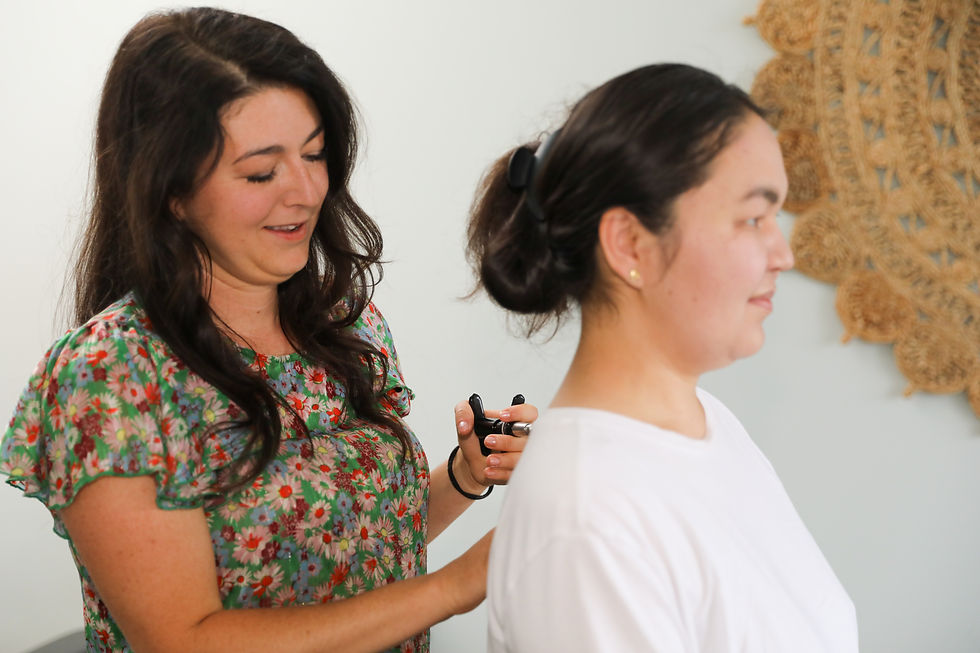
At The Well Healing Center, we use advanced INSiGHT scanning technology to objectively measure your baby's nervous system function, non-invasively and without any discomfort. These gentle scans look at heart rate variability, muscle tension, and temperature regulation to give us a real picture of what is happening beneath the surface.
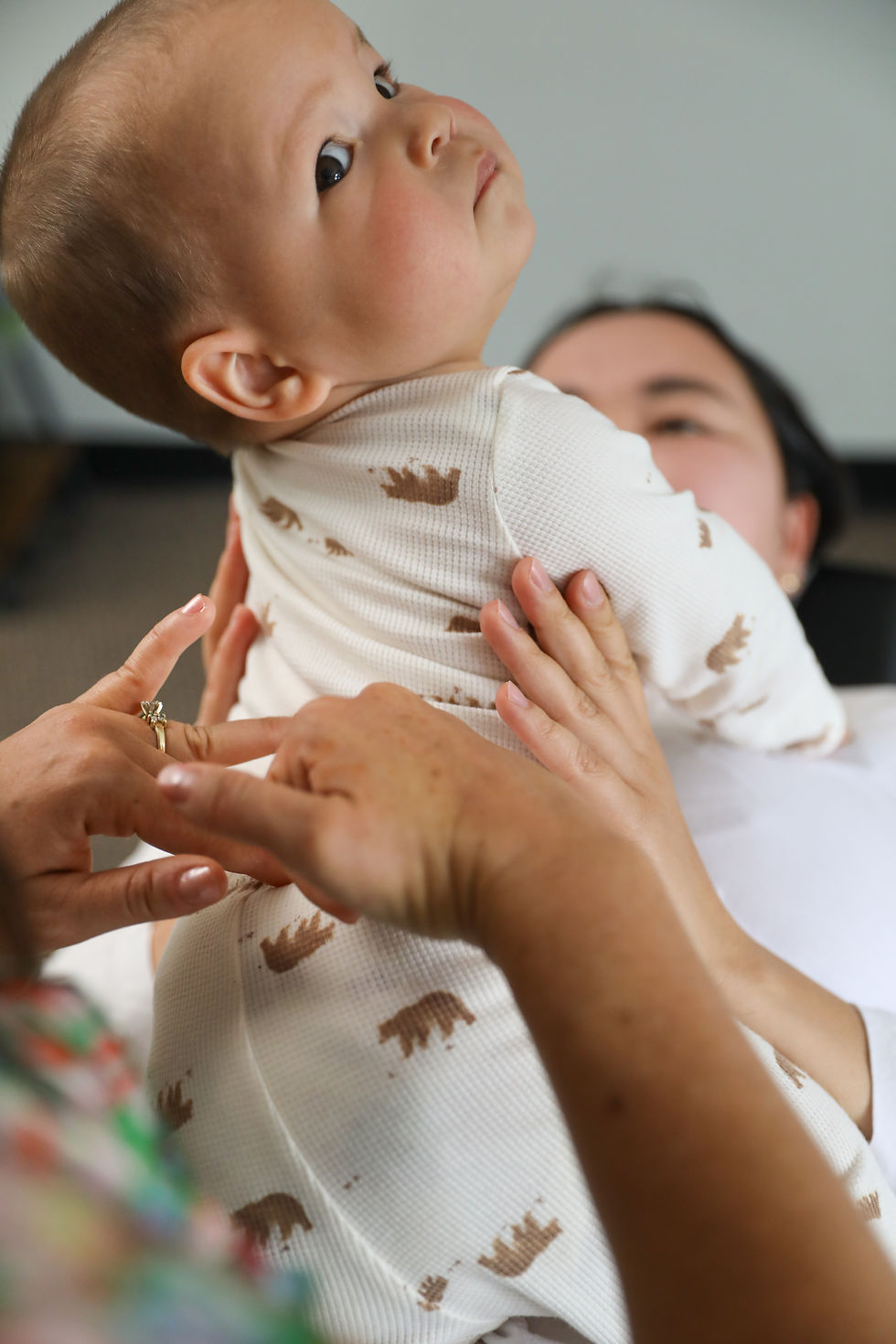
Adjustments for infants use an incredibly gentle touch, often no more pressure than you would use to check whether a tomato is ripe. Care adapts to each phase: the early weeks focus on regulation and feeding, while the later months support motor development, sensory processing, and social interaction.
Many families see real improvements in feeding, sleeping, and overall development when subluxation is identified and addressed early, during the window when it matters most.
The Foundation Is Being Built Right Now
Your baby's first year is the single greatest opportunity you will ever have to positively shape their neurological development and long-term health. The patterns set during this time do not just fade. They tend to last a lifetime.
If you sense something is not quite right with your baby's feeding, sleeping, development, or ability to settle and self-regulate, trust those instincts. You do not have to wait and see.
Book Your Baby's Consultation in Lafayette, CO
Reach out to The Well Healing Center today to schedule your baby's initial consultation. If you are local to Lafayette, Erie, Louisville, Boulder, or anywhere in Boulder County, we would love to help.
If you are not local to us, reach out and we can help you find a neurologically-focused chiropractor near you.
Your baby is not just learning to eat, sleep, and move. They are building the neurological foundation for their entire life. Let's make sure that foundation is strong.
Frequently Asked Questions
What are nervous system red flags in babies?
Signs the nervous system may be under stress include difficulty feeding or latching, poor sleep, excessive fussiness, trouble settling, asymmetrical movement, favoring one side, and skipping or struggling with milestones like head control or crawling.
Should I worry if my baby skips crawling?
Crawling is one of the most neurologically significant milestones because it develops both brain hemispheres and lays groundwork for walking and reading. Skipping it or crawling asymmetrically can be worth having assessed, since the sequence of development matters more than the speed.
Is the 4-month sleep regression real?
It is real, but it is not actually a regression. It reflects major neurological reorganization in your baby's brain. Understanding that can change how you support your baby through it.
Is chiropractic care safe for infants?
Yes. Infant adjustments are extremely gentle, often no more pressure than you would use to check whether a tomato is ripe. At The Well Healing Center we assess each baby with gentle, non-invasive INSiGHT scans before making any recommendations.


Comments