
Your Child's Diagnosis Isn't Their Destiny: The Good and the Bad of Labels
Updated: Aug 31

If you are reading this, chances are you have lived it.
The sleepless nights spent researching every new struggle. The mounting specialist appointments. The conflicting advice from people who spent ten minutes with your child and think they have all the answers. The forms. The evaluations. The
waiting rooms. The second opinions.
And then, finally, after months or maybe years of searching, someone said the words you had been chasing. Autism. ADHD. Sensory Processing Disorder. Anxiety.
Your child had a diagnosis. A label that promised to explain everything, while somehow leaving you with even more questions. But your child's diagnosis is only the starting point, not the whole story.
You probably felt relief and grief in the very same breath. Relief that your instincts were right all along. Grief for a future that suddenly looked different from the one you had imagined. And underneath both of those feelings, a quiet question that will not go away.
Is this label going to help my child, or is it going to limit them?
You are not alone in asking that. And you deserve a real answer.
Quick answer: A diagnosis can be both a key and a cage. It can open real doors: services, therapies, accommodations, and the validation of finally being believed. But the same label can also become the only lens providers look through, narrowing their view of your child instead of widening it. The goal is to use the diagnosis as a tool without letting it become your child's whole identity. At The Well Healing Center in Lafayette, CO, we look at the nervous system underneath the label, and we work alongside the supports you already have, not in place of them.
Why So Many Families Are Living This Right Now
More kids are being diagnosed than ever before, and if it feels that way to you, you are right.
Research suggests a striking number of children are now navigating a developmental difference or a chronic health condition, and those numbers have climbed a great deal over the last couple of decades.
This is not only about better awareness. Environmental factors like prenatal stress, birth interventions, early antibiotics, and everyday toxin exposure have combined into what we call a "Perfect Storm," one that can overwhelm developing nervous systems.
When conventional medicine cannot explain why your child is struggling, it often reaches for a label. And honestly? After being dismissed or told you are "overreacting," most parents want that label. It finally feels like validation.
But here is the hard part. That same label can become a cage. The diagnosis that unlocks an IEP can also become the lens every future provider looks through. And the deeper question can get buried: why is your child's nervous system stuck in the first place?
The Good: What Your Child's Diagnosis Can Genuinely Do
Let us give credit where it is due, because a diagnosis is not all bad. It can open real doors:
Access to services like IEPs, 504 Plans, classroom accommodations, and school-based therapies
Insurance coverage for therapies, adaptive equipment, and specialized programs
Legitimacy and validation, so you finally stop being "that overreacting parent"
Community and connection with support groups and other families walking a similar road
A clear path to early intervention during your child's most neuroplastic years (the years when the brain is most able to change and adapt)
Recognition that your child's struggles are real, not a behavior problem or a parenting failure
If any of this describes what your family has gained, that is worth honoring. You fought hard for it.
The Bad: What Nobody Warns You About
There is a flip side, and it deserves just as much honesty:
An identity shift, where your child slowly stops being seen as themselves and starts being seen as their diagnosis
Learned helplessness, as kids absorb the idea that there is a ceiling on what they can do
A narrow care lens, where every provider treats the label instead of the whole child
Limitations taught far too early: "I can't, because of my..."
Disconnected specialists who treat symptoms instead of asking what is actually causing them
None of this means the diagnosis was wrong to pursue. It means the label needs boundaries. You get to decide what it explains, not what it defines.
The Same Storm, Wearing Different Names
Here is something most families are never told. Many of these childhood diagnoses may trace back to one shared root: a dysregulated nervous system.
Prenatal stress, birth strain, early antibiotic use, and toxin exposure can build that "Perfect Storm" we mentioned. When a child's nervous system gets stuck in sympathetic dominance (fight-or-flight mode), it can show up in very different ways depending on the child. One diagnosis. A different diagnosis. Sometimes several at once.
For most of these conditions, there is no single blood test or scan that defines them. Often it may be the same underlying storm, just showing up under different names.
Same storm. Different labels.
You Don't Have to Choose Between the Label and Hope
This is the heart of it. You can use the diagnosis as a tool without letting it become your child's identity.
Take the services. Take the support. And keep believing in what is possible. See your child as a whole person first, and a diagnosis second. Honor exactly where they are right now, while still believing in where they can go. And pair the conventional supports you already have with care that looks at the nervous system underneath.
This is not about rejecting the diagnosis. It is about refusing to let it have the final word.
A Path Forward That Looks at the Whole Child

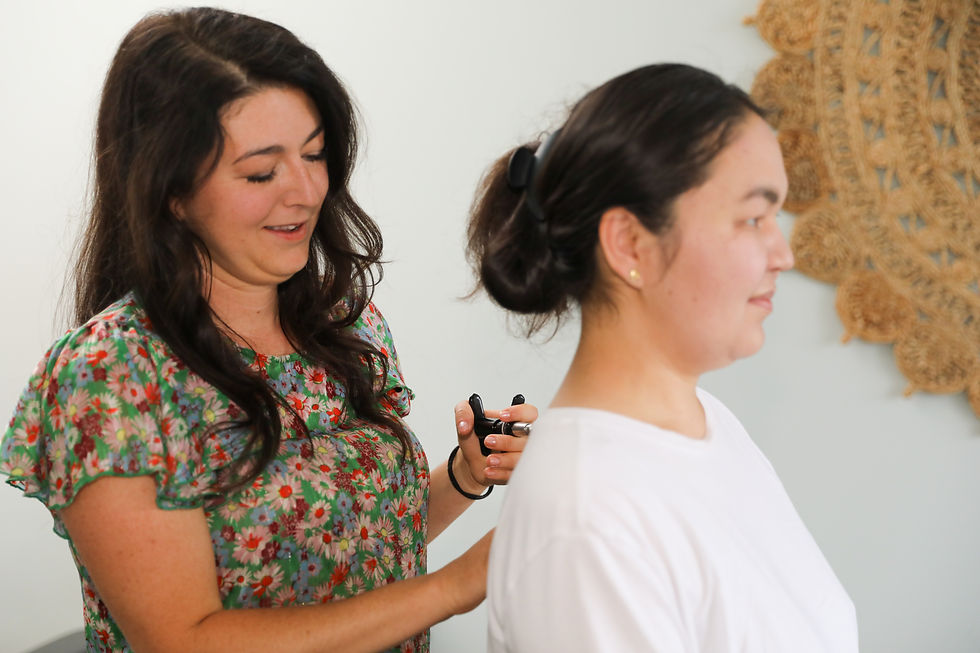
At The Well Healing Center, we use INSiGHT scans to objectively measure how your child's nervous system is functioning. Not guessing, but actually seeing what is happening underneath the symptoms. From there, neurologically-focused chiropractic care helps support and regulate the autonomic nervous system (the automatic system that runs things like digestion, sleep, and the stress response).
Think of it like releasing a parking brake. As the nervous system starts to come out of that stuck fight-or-flight state, the other therapies you are already doing, like OT, speech, and behavioral support, can start to work better, because the underlying system is finally able to respond.
I want to be clear about a few things. Chiropractic care does not treat or cure autism, ADHD, SPD, anxiety, or any diagnosed condition. We are not here to replace anything you are already doing for your child, and we would never advise you to change or stop a medication. That is a conversation for you and your prescribing doctor. What we can do is support the nervous system so the rest of the team has a stronger foundation to build on.
Managing symptoms is not the same as supporting the foundation underneath them.
You Are Not Alone in This: Start Here in Lafayette CO
Your child's diagnosis gave you answers, but it does not get to write their future.
Your child is not broken. Not a label. Not a ceiling. They are a whole, capable person with a nervous system that can be supported and regulated over time.
You have not been failing. You have been fighting for your child, and you have been missing one specific piece.
If you are ready to look beyond the label and understand what is going on underneath, we would be honored to walk this road with you, right alongside your child's other providers. We see families from Lafayette, Erie, Louisville, Boulder, and all over Boulder County.
Frequently Asked Questions
Is getting my child a diagnosis a good thing or a bad thing?
It can be both. A diagnosis opens real doors: services, IEPs, insurance coverage, community, and the validation of finally being believed. But the same label can narrow how providers see your child and quietly teach limits too early. The goal is to use it as a tool without letting it become your child's whole identity.
Why are so many kids being diagnosed now?
It is not only better awareness. Many practitioners point to a stack of environmental stressors, things like prenatal stress, birth interventions, early antibiotics, and toxin exposure, that can overwhelm developing nervous systems. When conventional medicine cannot explain the struggle, it often reaches for a label to describe it.
Does a diagnosis mean my child is limited?
No. A diagnosis describes where your child is right now. It does not decide where they can go. Your child is a whole, capable person, and the nervous system can change and adapt over time, especially in childhood. The label explains some things. It does not get to define everything.
Can chiropractic care replace my child's therapies or medication?
No. Chiropractic care does not treat or cure any diagnosed condition, and it is not a replacement for therapy or medication. Any decision about medication belongs with your prescribing doctor. Neurologically-focused care is meant to support the nervous system so your child's existing supports have a stronger foundation to work from.


Comments